
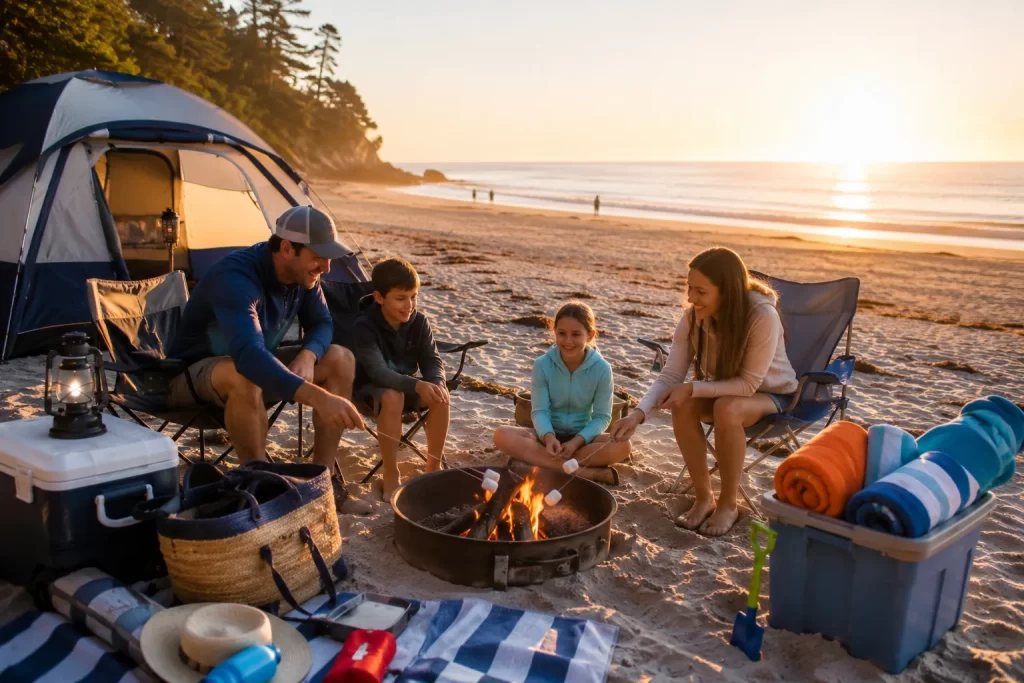
Beach Camping is one of the most popular ways for families to enjoy the outdoors. According to Kampgrounds of America, more than 58 million U.S. households camp each year. Coastal campsites attract thousands of visitors during summer because they combine relaxation, swimming, and outdoor activities in one location. Families often choose beach destinations because children can enjoy both nature and water safely.
Planning makes a huge difference when camping near the coast. Sand, wind, humidity, and changing tides create conditions that differ from regular campsites. We have experienced beach camping trips in California, Florida, and North Carolina, and proper preparation consistently improved comfort and safety. A well-planned trip reduces stress and helps families enjoy quality time together.
Beach Camping also remains affordable. State park campgrounds typically charge between $25 and $60 per night in 2025. Private beachfront sites often range from $55 to $120 per night. Understanding what to pack and how to prepare helps families maximize value and create lasting memories.
Choosing the Right Beach Campsite
Research Facilities and Local Conditions
Selecting the right location determines the success of a family camping trip. National and state parks offer established facilities that improve convenience. Popular family destinations include Huntington Beach State Park, Assateague Island National Seashore, and Bahia Honda State Park.
We recommend checking campground amenities before booking. Restrooms, showers, and picnic tables provide added comfort. Campgrounds with lifeguards and marked swimming areas increase safety for children. According to the National Park Service, campsites near protected dunes help reduce wind exposure and provide better shelter.
Important factors to evaluate include:
- Distance from restrooms.
- Availability of potable water.
- Shade coverage.
- Tidal schedules.
- Parking accessibility.
- Fire regulations.
| Feature | Recommended Standard |
|---|---|
| Campsite Cost | $25–$60 per night |
| Distance to Beach | Under 500 feet |
| Wind Speed | Below 15 mph |
| Water Temperature | 72°F–82°F |
| Shade Coverage | At least 40% |
| Quiet Hours | 10 PM to 6 AM |
Careful research helps families avoid unpleasant surprises and creates a more relaxing experience.
Essential Packing Tips for Beach Camping
Prepare for Sun, Sand, and Moisture
Packing correctly improves comfort throughout the trip. Beach environments create unique challenges because saltwater and humidity affect equipment faster than inland locations. We learned through experience that waterproof storage containers and extra towels become essential after the first day.
Experts from the American Academy of Dermatology recommend sunscreen with SPF 30 or higher. Families should reapply sunscreen every two hours. Sunburn can occur within 15 minutes during peak summer conditions.
Essential items include:
- UV protection tent.
- Sand stakes for stability.
- Waterproof bags.
- Folding beach chairs.
- First aid kit.
- Portable fan.
- LED lanterns.
- Cooler with ice packs.
- Extra clothing.
- Insect repellent.
Most family coolers maintain temperatures below 40°F for up to 48 hours when filled with ice. Food safety becomes easier with proper cooling equipment. We also recommend bringing one gallon of drinking water per person each day to avoid dehydration. Start your journey with our guide to Beach Camping.
Keeping Children Safe During Beach Camping
Establish Clear Rules and Boundaries
Safety remains the top priority during Beach Camping trips. The United States Lifesaving Association reported more than 100 million beach visits annually, making water awareness extremely important. Families should teach children about rip currents and swimming zones before entering the ocean.
We always establish visible landmarks and meeting points. Bright-colored umbrellas help children recognize the campsite quickly. Life jackets provide additional protection for younger swimmers. Experts advise constant supervision because ocean conditions can change rapidly.
Safety guidelines include:
- Swim near lifeguards.
- Check tide schedules daily.
- Avoid strong currents.
- Wear sun-protective clothing.
- Keep hydration supplies available.
- Maintain a stocked first aid kit.
Parents should also monitor weather updates. NOAA weather alerts provide early warnings for storms and high surf conditions. Spending five minutes reviewing forecasts each morning improves safety significantly.
Fun Activities for Families During Beach Camping
Create Memorable Experiences Together
Beach Camping offers more than swimming and sunbathing. Families can enjoy educational and recreational activities that strengthen relationships. According to the Outdoor Industry Association, families who participate in outdoor activities together report higher satisfaction levels and improved communication.
During our beach trips, simple activities often became favorite memories. Sandcastle competitions, shell collecting, and evening campfires entertained children for hours. Stargazing also became a highlight because coastal areas often experience lower light pollution.
Popular family activities include:
- Sandcastle building contests.
- Beach volleyball.
- Nature photography.
- Tide pool exploration.
- Fishing.
- Kayaking.
- Sunset walks.
- Stargazing sessions.
Portable telescopes priced between $80 and $200 allow families to observe planets and constellations. Educational activities add value while keeping children engaged. Balanced schedules help everyone relax without feeling overwhelmed.
Conclusion
Beach Camping creates unforgettable experiences for families when proper planning comes first. Choosing the right campsite, packing suitable equipment, and prioritizing safety improve the overall experience. Reliable preparation helps families handle changing weather, strong sun, and coastal conditions with confidence.
Our experience shows that simple precautions make every trip more enjoyable. Quality equipment, clear safety rules, and engaging activities help children and adults create lasting memories together. With campsite fees starting at $25 per night and countless coastal destinations available, Beach Camping remains one of the most rewarding and affordable outdoor adventures for families.