
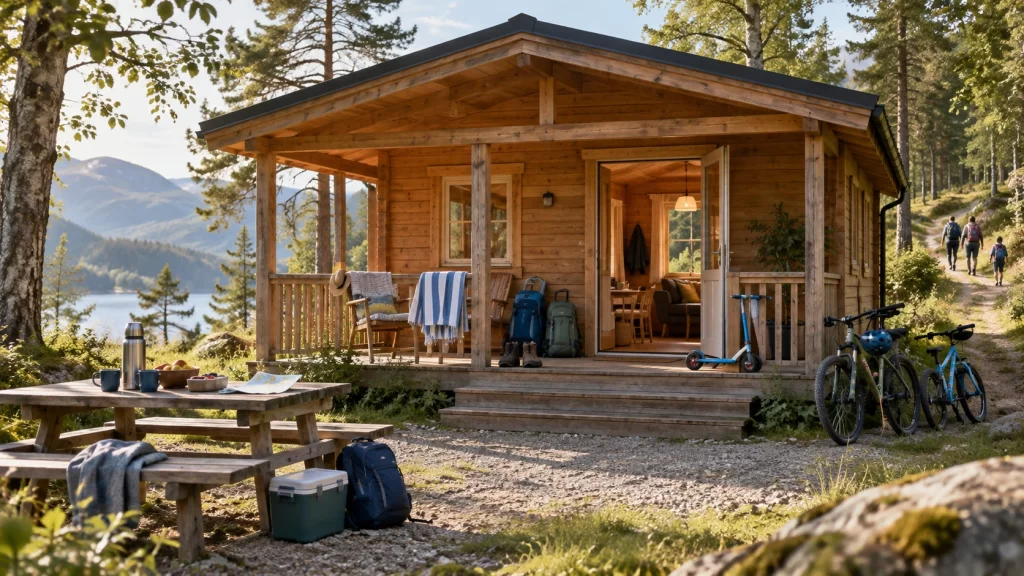
Cabin accommodation can make a family holiday easier to organize when everyone wants something different from the day. A cabin gives you a familiar place to leave your bags, prepare for outings, and return when children need a break. The useful question is not how many activities you can fit into a stay, but how to use that base to keep the trip enjoyable for everyone.
Choose a Cabin That Fits Your Plans
Start with the activities your family is most likely to do, then look at the cabin’s location. If beach time is the priority, consider how easily you can get back with wet clothes and tired children. If you expect to visit an attraction, look at the journey in both directions, including the return trip at the end of a long day.
The cabin itself matters as much as its surroundings. Check the sleeping arrangement, available cooking equipment, bathroom access, and space for clothes and gear before booking. Cabin facilities vary, so confirm what is included rather than assuming you will have everything you use at home. A small difference in layout can matter when someone needs to sleep while the rest of the family is still awake.
Also look at what is available on the accommodation site. A playground or nearby beach can give children something to do without another journey. At the campsite, cabins are offered near the sea and a local attraction, and the site describes a beach and family activities. Even with options close by, check the details that matter to your family before building a day around them.
Plan Days Around the Return Trip
A cabin works best as a base when the schedule leaves room to come back. Instead of treating each morning as the start of an uninterrupted day out, decide which activities need a full day and which can fit around meals or rest. This is especially helpful when family members have different energy levels.
For example, a family planning a visit to a local attraction might keep the following morning free for beach time or playground time. That gives children a chance to enjoy another activity without committing everyone to a second long outing. The point is to leave space for a change of pace, not to predict exactly when anyone will get tired.
Try identifying one main activity for each day and one easy alternative. If the weather changes, an attraction takes longer than expected, or a child wants downtime, you can adjust without feeling that the day has failed. Short activities near the cabin are particularly useful on arrival and departure days, when travel and packing already take time.
Set Up the Cabin for Easy Departures
A little organization inside the cabin can make outings simpler. Put frequently used items in one place so they do not disappear among holiday bags. Keep a separate spot for wet or sandy gear, and check whether you need to bring towels, bedding, or other essentials before leaving home.
A practical day bag might include:
- Water, snacks, and anything needed for younger children between meals.
- Clothing suited to the planned activity and a possible change in weather.
- A change of clothes if swimming or messy play is likely.
- Any tickets, directions, or booking details needed that day.
Pack for the activity rather than carrying every possible item. Before heading out, make a quick check of the return plan: when will the family eat, and what will be easiest when you get back? Knowing whether you will cook, eat on site, or go elsewhere can prevent an evening of tired people trying to make decisions.
Use Nearby Activities in Small Windows
A family activity does not have to fill an afternoon to be worthwhile. A short visit to a playground after breakfast, a walk toward the beach, or a little time outdoors before dinner can give children a change of scene while keeping the day flexible. These smaller outings are often easier to fit around naps, meals, and different bedtimes.
It helps to distinguish between activities that require preparation and those you can decide on at the last minute. Swimming may call for towels, dry clothes, and time to clean up afterward. A brief playground visit may need much less. Knowing the difference lets you choose an activity that fits the time and energy you actually have.
If you are staying at a campsite with shared facilities, learn where they are early in the stay. Finding cooking, washing, or laundry facilities when you need them is easier if you have already checked their location and any relevant access details. The same applies to on-site dining: look at current arrangements before relying on it for a particular meal. For more detailed information on this topic, read our guide on How to Prepare Your Caravan for a Comfortable Camping Holiday.
Leave Room for Different Ages and Interests
Family members rarely enjoy an activity for the same length of time. One child may want to stay at the beach while another is ready to leave. A cabin gives the group a place to regroup, but it still helps to discuss expectations before setting out. Agree on a rough time to reassess rather than promising a fixed schedule that may not suit anyone later.
When possible, alternate bigger outings with simpler ones. This gives adults time to handle ordinary holiday tasks and children time to play without constantly moving between destinations. If your group can split up safely and comfortably, some can take a short outing while others rest at the cabin. The best arrangement depends on the children’s ages and the adults available.
Before booking, check arrival instructions and check-in times so your first activity fits the travel day. Once you arrive, treat the cabin as a practical centre for the holiday: prepare there, head out with a manageable plan, and return with enough time to settle in. That rhythm can make family activities feel like part of the break rather than a schedule everyone has to keep up with.