
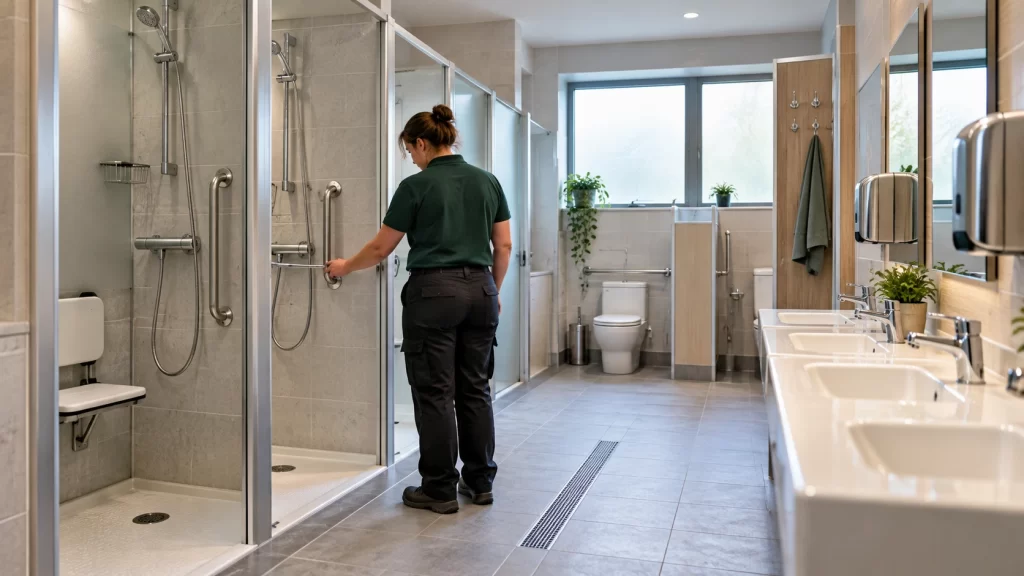
A clean shower room can look reassuring at first glance, but appearance alone does not tell you whether it is comfortable and safe to use. Water on the floor, a loose fitting, or an empty soap dispenser can quickly change the experience. Sanitary facility maintenance checks help campsite staff catch those issues, while guests can make a few simple observations of their own before settling in.
What a useful maintenance check covers
A good check goes beyond whether a room has been cleaned. It considers whether the facilities work as expected, whether surfaces need attention, and whether anything could make the space difficult to use. Conditions can change throughout the day, especially when many guests are using the same toilets and showers, so a check is a snapshot rather than a promise that the room will stay in the same condition.
Key areas to look at include:
- Floors and drainage: Standing water, slippery patches or a drain that empties slowly deserve attention. Wet floors can also be a sign that a shower screen or fitting is leaking.
- Toilets, sinks and showers: Fixtures should operate normally, with problems such as persistent leaks, blocked drains or damaged handles reported for repair.
- Supplies and waste: Soap, toilet paper and bins need regular attention. An overflowing bin can undermine an otherwise tidy room.
- Doors, locks and lighting: Guests need privacy and enough light to move around and spot wet areas or steps.
- Cleaning condition: Touch points, floors and washing areas should be checked for visible dirt as well as signs that another clean is needed.
These observations serve different purposes. Cleaning deals with dirt and used supplies; maintenance deals with faults such as a broken lock or leaking tap. A freshly cleaned room may still need a repair, and a functioning room may still need cleaning after a busy period.
Why timing matters during a campsite stay
Shared washrooms may be quiet at one point and busy soon afterward. Morning showers and evening routines can put more pressure on the same facilities than an occasional inspection might reveal. For campsite operators, checking at intervals suited to actual use helps identify problems while they are still manageable. For guests, the practical point is to assess the room as it is when they need it.
Imagine arriving late and finding a shower cubicle with water spreading beyond its usual wet area. Even if the room looks clean, using another shower and reporting the problem is sensible. It gives staff a clear issue to investigate and avoids adding more water to the floor. A quick report is more helpful than assuming the next guest or cleaner will notice it.
The same judgment applies to small faults. A tap that drips briefly after use may be different from one that continues running. A bin that is nearly full may simply need emptying; a damaged lid or sharp edge calls for more immediate attention. Describing what you see, and where, makes it easier for staff to respond.
Checks guests can make without taking on repairs
Guests do not need to inspect a sanitary building like a maintenance worker. A short look before using a facility is enough to catch many practical problems. Check whether the floor offers a clear path, the cubicle door closes and locks, the shower or sink drains, and the supplies you need are available. If something feels unsafe or unusable, choose another available space and tell campsite staff.
Avoid trying to fix electrical fittings, plumbing or damaged fixtures yourself. Even a minor-looking fault can have a cause that is not visible. Reporting it allows the operator to decide whether the area needs cleaning, repair or temporary closure. If a spill or leak is creating an immediate slipping concern, alerting staff promptly also helps protect the next person who enters.
The campsite may provide several sanitary buildings with toilets and showers in cubicles and separate rooms, along with a changing room, an accessible bathroom and a disposal facility. Access to the sanitary areas may be provided through a card issued at check-in. Knowing where the relevant facility is, and keeping the access card handy, can make arrival and daily routines smoother. Guests should still check the current condition of the particular room they use.
Pay attention to different users and spaces
A sanitary facility has to serve people with different needs. A parent using a changing room may need a clear, clean surface and a working door. Someone using an accessible bathroom may depend on unobstructed access and fittings that operate reliably. A guest emptying a motorhome’s waste needs the designated disposal area to be usable and should follow the campsite’s instructions for it.
This is one reason a general glance at the main shower block is insufficient as a full maintenance check. Less frequently used spaces can develop faults too, and an obstacle that seems minor in one room may prevent someone else from using it comfortably. Guests can help by leaving shared spaces clear and reporting issues in the specific room or facility where they occur. For more detailed information on this topic, read our guide on How to Use Cabin Accommodation as a Base for Family Activities.
Make reporting specific and useful
A report does not need technical language. Identify the building or room as clearly as you can, describe the problem, and say whether it is happening now. “The second shower is draining slowly, and water is spreading across the floor” gives staff more to work with than “the showers are bad.” If you are unsure whether something is a fault, it is still reasonable to mention what you observed without guessing at the cause.
Sanitary facility maintenance checks are most useful when they lead to timely cleaning or repair, and when guests treat the spaces with care between checks. Before using a shared toilet, shower, or changing area, take a moment to notice its condition. If a problem affects safe or comfortable use, choose another available facility and report it clearly. That small step helps everyone make better use of a shared campsite space.