
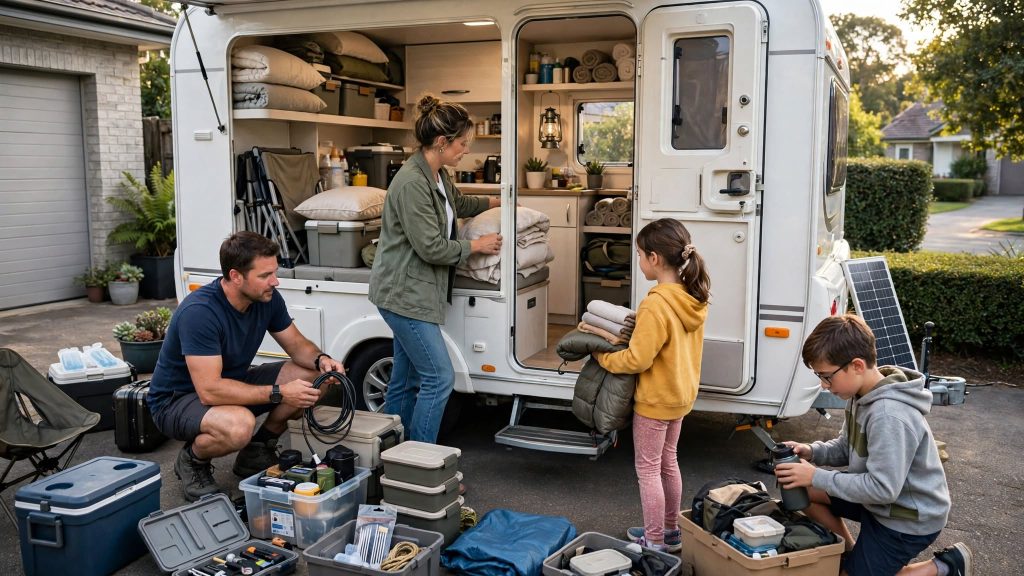
A comfortable caravan holiday starts well before you arrive at the campsite. Preparing your caravan properly can make everyday tasks easier, reduce avoidable problems, and help you settle into your pitch without spending the first few hours looking for missing equipment or dealing with basic maintenance.
Good caravan preparation covers more than packing clothes and food. You need to check the caravan itself, organise the living space, plan for cooking and sleeping, and make sure essential equipment is ready for the conditions you expect. A practical pre-trip routine can make the whole camping holiday feel calmer and more organised.
Check Your Caravan Before Leaving Home
Start with a general inspection several days before departure rather than waiting until the morning of your trip. This gives you time to deal with anything that needs attention.
Walk around the caravan and look for visible damage, loose fittings, cracked seals, or anything that seems different from your previous trip. Check the tyres for obvious wear or damage and make sure they are suitable for travel. Lights, indicators, mirrors, towing connections, and number plates should also be checked before setting off.
Inside, test doors, windows, blinds, cupboards, and storage catches. Items that move freely while parked may become a problem once the caravan is on the road, so secure anything that could open or shift during travel.
Test the Essential Caravan Systems
Water, electricity, gas, heating, and refrigeration have a major effect on comfort, so check these systems before your camping holiday.
Run the taps and inspect accessible connections for leaks. If your caravan has a water pump, make sure it operates normally. Check the leisure battery and electrical equipment you plan to use. Fridges should be clean and working correctly before food is loaded.
Gas appliances need particular care. Inspect equipment according to the manufacturer’s instructions and avoid using anything that appears damaged or faulty. If you are unsure about a gas or electrical problem, have it checked by a suitably qualified professional rather than attempting an unfamiliar repair yourself.
Create a Comfortable Sleeping Area
A poor night’s sleep can quickly take the enjoyment out of a camping holiday. Before leaving, check mattresses, bedding, pillows, and any convertible beds you intend to use.
Choose bedding that suits the expected temperature rather than simply packing the same setup for every season. Cooler nights may require extra blankets, while warmer conditions can make lighter bedding more comfortable.
Ventilation matters too. Check that windows, roof vents, and screens operate properly. Being able to increase airflow can make a noticeable difference when several people are sharing a relatively small caravan.
Organise the Kitchen for Everyday Use
Caravan kitchens work better when frequently used items are easy to reach. Instead of filling every cupboard, think about what you will genuinely use during the trip.
Pack suitable cookware, plates, cups, cutlery, food containers, cleaning supplies, and a few basic cooking tools. Keep heavier items low and properly secured for travel.
Meal planning can also reduce unnecessary packing. If you already know what you will cook for the first few days, you can bring the ingredients and equipment required instead of carrying several items that never leave the cupboard.
Keep Food Storage Practical
Check the refrigerator before loading perishable food and use sealed containers for dry ingredients and snacks. Separating food from cleaning products also makes storage safer and easier to manage.
Leave some cupboard and fridge space available. A completely packed caravan can become difficult to organise once you start using it every day.
Pack for Comfort Without Overloading
It is tempting to prepare for every possible situation, but excessive packing can create clutter and may add unnecessary weight. Caravan preparation is partly about choosing what not to bring.
Focus on items that directly improve daily comfort, such as weather-appropriate clothing, comfortable outdoor chairs, towels, toiletries, charging cables, basic cleaning equipment, and suitable footwear.
Keep frequently needed items accessible instead of burying them beneath luggage. A small torch, first-aid supplies, rubbish bags, basic tools, and weather protection are much more useful when you can find them quickly.
Always consider the caravan’s permitted weight limits when loading and distribute items appropriately rather than placing most of the load in one area.
Prepare Your Outdoor Living Space
The area outside your caravan often becomes an extension of your living space. A few carefully chosen items can make it more functional without turning your pitch into a storage area.
Outdoor chairs and a table provide a convenient place for meals and relaxing. Depending on the campsite and weather, an awning or suitable shelter may offer additional usable space.
Keep neighbouring pitches and shared areas in mind when setting up. Reading Camping Etiquette: Simple Rules for a Great Stay before your trip can also help you think about noise, shared facilities, personal space, waste disposal, and other simple habits that contribute to a pleasant campsite environment.
Plan for Different Weather Conditions
Weather can change during a caravan holiday, so prepare for more than one type of condition.
For wet weather, pack waterproof clothing, suitable footwear, and something for storing damp items without spreading moisture through the caravan. A doormat or small entrance mat can help keep mud outside.
For warmer conditions, think about shade and ventilation. Check blinds and vents before departure and avoid blocking airflow with luggage. If colder weather is possible, test the caravan’s heating system before travelling rather than discovering a problem after the temperature drops.
Keep the Interior Easy to Maintain
A caravan can become untidy surprisingly quickly because several activities take place in a compact space. Simple organisation makes daily cleaning much easier.
Give important items a regular storage location and return them after use. Separate clean and dirty clothing, keep shoes near the entrance when practical, and have a clear place for rubbish and recycling.
A small cleaning kit containing cloths, suitable surface cleaner, a brush, and bin bags is usually enough for everyday maintenance. The aim is not to keep the caravan spotless at all times, but to prevent clutter from making the space uncomfortable.
Do a Final Check Before Departure
Once everything is packed, walk through the caravan one last time. Close and secure cupboards, windows, roof vents, and internal doors as required for travel. Make sure loose objects cannot move around and confirm that essential travel equipment is ready.
Outside, complete your normal towing and safety checks carefully. Avoid rushing this stage simply because everyone is eager to leave.
Conclusion
Preparing your caravan for a comfortable camping holiday is mainly about getting the basics right before you travel. Check the caravan and its essential systems, organise sleeping and cooking areas, pack thoughtfully, and prepare for changing weather.
A caravan does not need to be filled with equipment to feel comfortable. A well-planned layout, reliable essentials, sensible storage, and a little preparation can make daily life at the campsite easier, leaving you with more time to enjoy the holiday.